

Reading is a skill for life. We endeavour to promote both a love of reading and a good understanding of a wide range of fiction and non-fiction texts.
At Caton St Paul’s School we see reading as an integral part of the school curriculum that impacts on all learning. We value the importance of beconing a confident reader and work hard to develop children’s reading skills. We want children to enjoy reading a wide range of different books and be able to talk about books and authors.
All books throughout EYFS and KS1 have been carefully matched and ordered to align with our phonics scheme.
Reading in EYFS
Children are given a reading book when they start reception. To begin with they have picture books. This quickly changes to books with words linked directly to their phonics learning: Phase 2. They read to an adult as often as possible (at least 3 times a week) and are encouraged to read daily at home. Each child has a reading record and books are changed 3 times a week – we keep a close record of what they are reading and ensure each book matches their phonics level.
Guided reading is also carried out in EYFS and the books are again selected to match their phonics level.
Shared reading sessions ensure the children hear and see high quality texts – these books help the children to enjoy language, storytelling comprehension and the skills of prediction.
Reading in Key Stage 1
We continue to encourage daily reading at home and they continue to read to an adult individually at school.
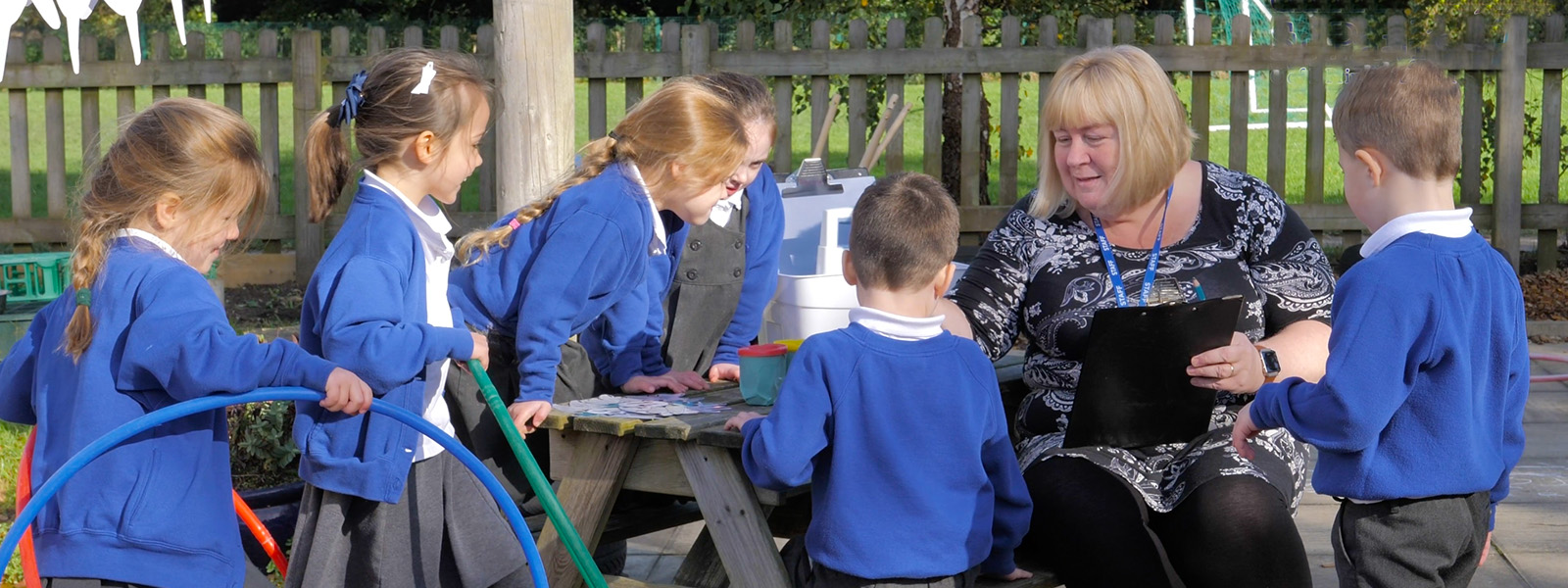
Children also have guided reading sessions once a week when they share a book in a group situation and focus on understanding what they have read. This usually follows with a reading and response activity.
Shared reading continues to be implemented to ensure children develop fluency, expression, build vocabulary and foster an enjoyment and confidence in reading.
Reading in Key Stage 2
We teach reading in Key Stage 2 in a variety of ways. This can be in the form of one-to-one reading with an adult, shared reading, guided reading sessions and independent reading. We use a range of reading schemes to broaden children’s understanding, interest and enjoyment of reading but once in Key Stage 2, as their reading develops, children are encouraged to read from a wide range of fiction and non-fiction books under the clear and careful direction of the class teacher.
At Caton St Paul’s we use Accelerated Reader to check reading ages and match books to individual reading ability – this ensures all our children are reading books that they can both enjoy and which stretch their vocabulary and comprehension skills.
All children are able to take books home to read with an adult and have an adult read to them, this shared learning will help children to practice their reading skills and develop a lifelong love of reading.
As well as teaching the skills necessary to become confident readers, we have our own library full of exciting books (both fiction and non-fiction) to further inspire our children to read widely.
If you have concerns about your child’s reading please speak to their class teacher – we will be happy to work with you and offer support and advice.
Click here for a leaflet on helping your child to read at home.
Book recommendations
Below are the 50 recommended books for each year group, as recommended by the website www.booksfortopics.com
We celebrate reading success with certificates for the number of nights reading in EYFS and KS1.
In KS2, we have reading displays/challenges that promote and encourage regular reading.
Each class (Diamond to Amethyst) has a reading book or novel that we share with the children throughout the week. This book is displayed on our class doors, promoting discussion between staff and pupils and between the children themselves – we want our children to love books and reading.
Phonics
Our approach to phonics is systematic, consistent and rigorous, in order that all children become readers as quickly as possible. We follow the Red Rose phonics programme. The intent behind Red Rose Letters and Sounds is to provide a rigorous and thorough planning programme in order to strengthen the teaching and learning of phonics, and ensure children become enthusiastic and successful readers and writers.
Children are taught in ability groups in each class, enabling them to be taught according to their phonics level. Teaching is very precise and tailored to the needs of each child irrespective of year group. Teachers and teaching assistants work and liaise closely with each other to monitor progress and to ensure children make the necessary progress.
The planned route is:
Reception
Phase 2 – 12 weeks (autumn term)
Phase 3 – 15 weeks (spring term and continuing into summer term)
Phase 4– 4 weeks (summer term)
Year 1
Phase 5 – 5 weeks – further graphemes for reading
Phase 5 – 4 weeks – alternative pronunciations
Phase 5 – 13 weeks – alternative spellings for phonemes
Phonics Screening Check (PSC) graphemes are included throughout the programme. Pseudo words are included from Phase 3 Week 12 onwards for Phonics Screening Check practice.
Year 2 – Word reading
Lancashire Key Learning in Reading and Learning and Progression Steps documents support planning for word reading through decoding by the end of key stage one.
Although formal phonics teaching is usually complete by the end of Year 2, children continue to use this knowledge as they move up the school.
Phonics intervention
Within the programme, a comprehensive overview of progression is provided. This tool outlines clear incremental progression steps for phonic knowledge and skills, and expectations of progress within and across phases. It enables teachers to conduct frequent and ongoing assessment to track and record children’s progress and to identify those children at, below or above expected levels, so that appropriate support or challenge can be provided.
At Caton St Paul’s we use catch-up and consolidation programmes in order to support children falling behind who need extra practice. These programmes follow the same progression as Red Rose Letters and Sounds. The programmes include:
• Fast Track Phonics for Phase 2 to Phase 5
• Bounce Back Phonics for Phase 4 and Phase 5.